Interactive neuroscience01
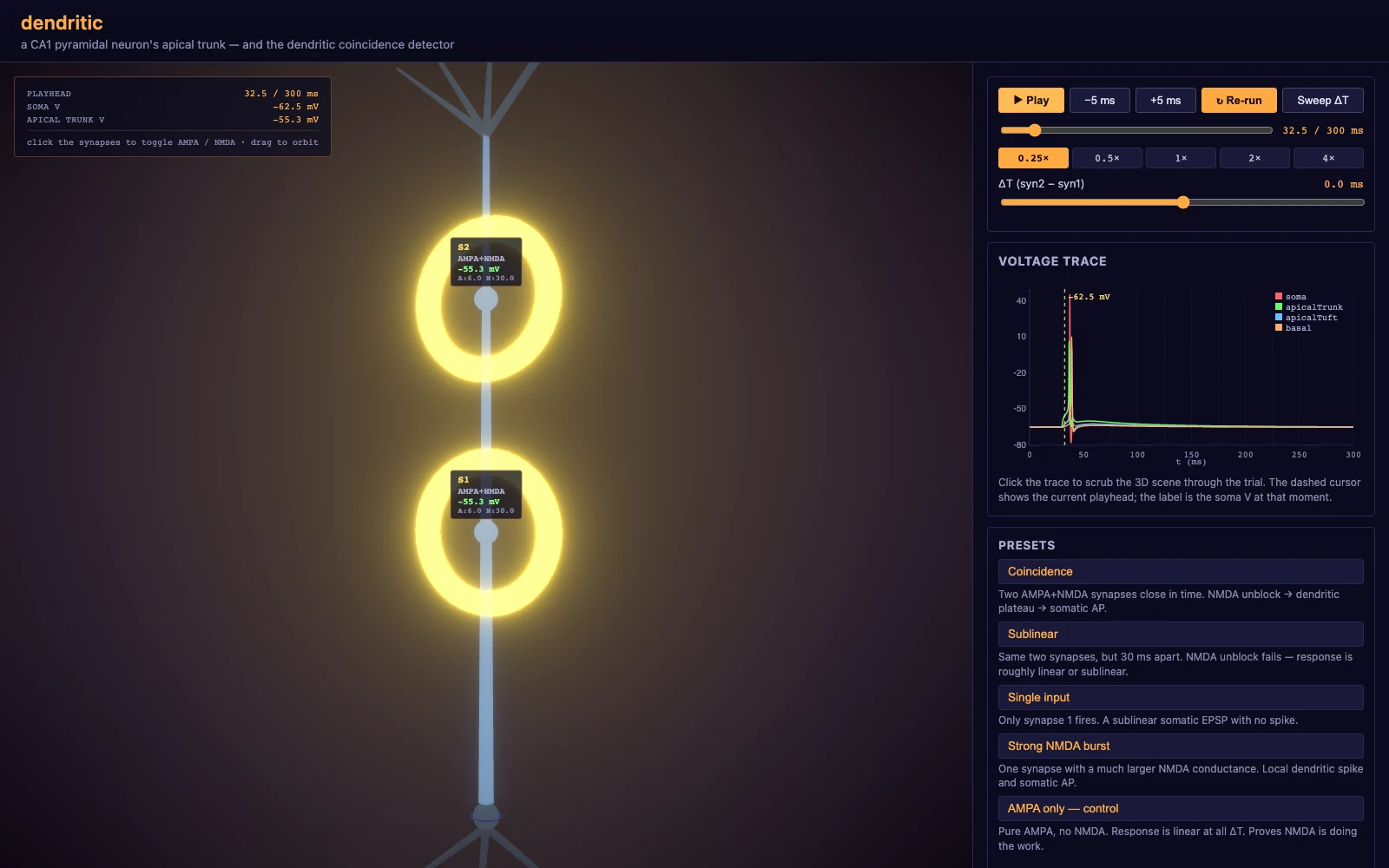
Dendritic coincidence
A browser-based CA1 neuron simulation for exploring how inputs combine across dendritic branches.

Prompt engineering optimises an utterance. Context engineering optimises a moment. Loop engineering optimises control — and control, in any system that acts under competing demands, is the thing cognitive science already named.
Read the essay On cognition & machines
A browser-based CA1 neuron simulation for exploring how inputs combine across dendritic branches.
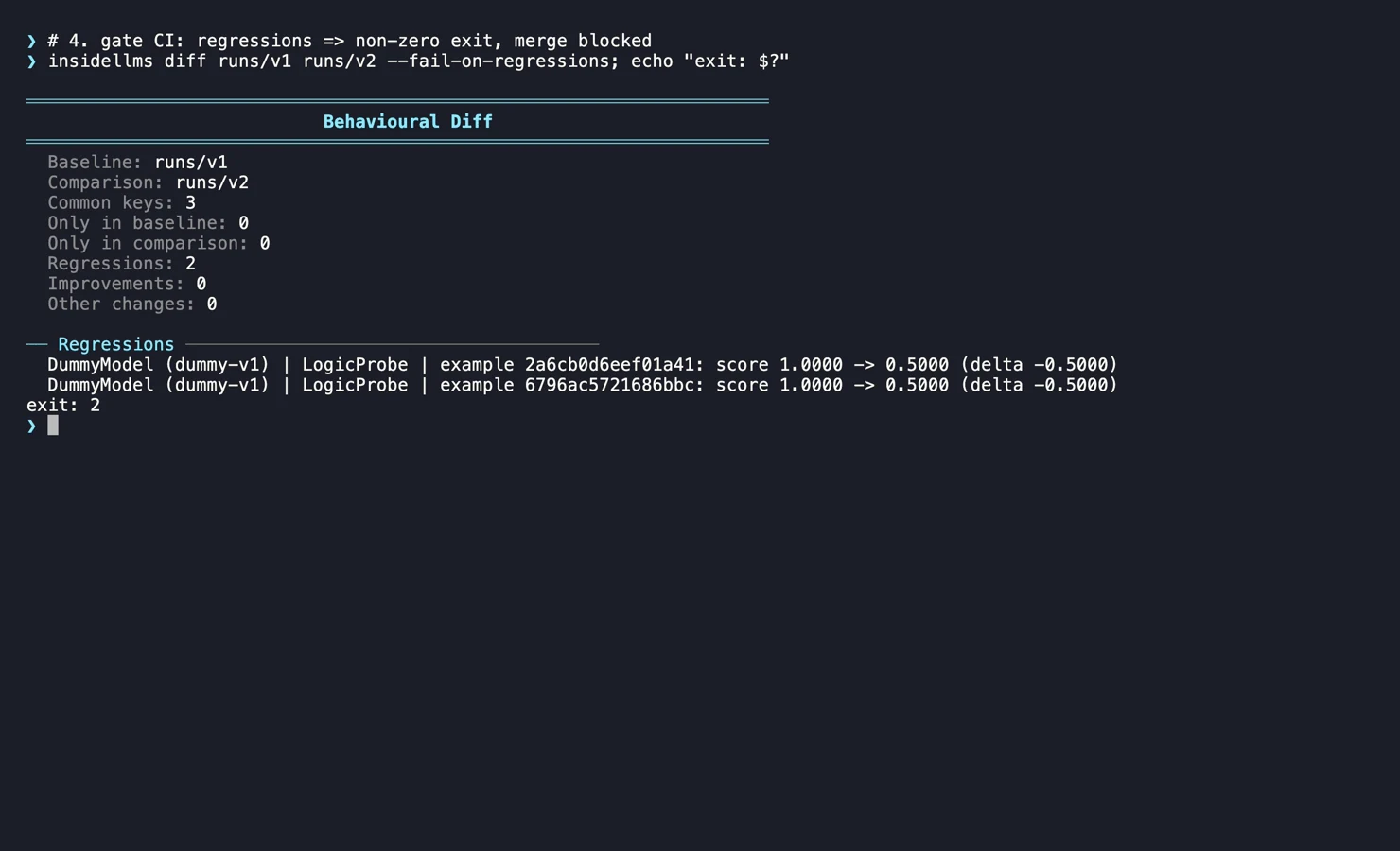
A Python library and CLI for comparing model behaviour through shared probes, recorded runs and inspectable differences.
Short tips, longer walkthroughs and opinions from making things.
Explore Guides Shop / In preparationThe shop is taking shape. Nothing for sale just yet.
Visit the shopThe voice AI industry spent years optimising the wrong object.
Why dynamic processing, not bigger context, is the next reliability frontier
Anthropic's new emotions paper does not show that Claude feels anything. It shows something more operationally important: affect-like internal states can tilt a model towards flattery, cheating and escalation — often before the transcript gives the game away.
Long context is RAM. RAG is a filing cabinet. The frontier is memory: what an agent keeps, compresses, revises, forgets, and surfaces when action is on the line.
Epistemic fidgeting, metacognitive failure in silicon, and why the Qualcomm paper on edge reasoning matters more than its benchmark tables suggest.
Four papers that quietly crossed the AI–cognition border — and what got lost in transit.
Ship Like a Maniac, But Bring Receipts
LLM benchmarks are a best guess at genuine model capability
The quiet discipline that will determine whether AI tells the truth.
Why what labs say about safety is a strategic signal, not a statement of values — and what that means for regulation.
Why the next leap in artificial intelligence will come from structure, not scale — and why a century of brain science has already drawn the blueprint.
Time as the medium in which computation unfolds, measured and synchronised at the level of individual neurons.
In conventional security, hardening a system makes it harder to attack. You patch vulnerabilities, reduce attack surface, and defence moves in lockstep with robustness. AI alignment breaks this assumption.
Late January 2026 will be remembered as the week a lobster meme accidentally taught the entire technology industry a serious idea.
The pursuit of AI supremacy has reached an inflection point where fundamental physics, rather than algorithmic ingenuity alone, dictates competitive advantage.